
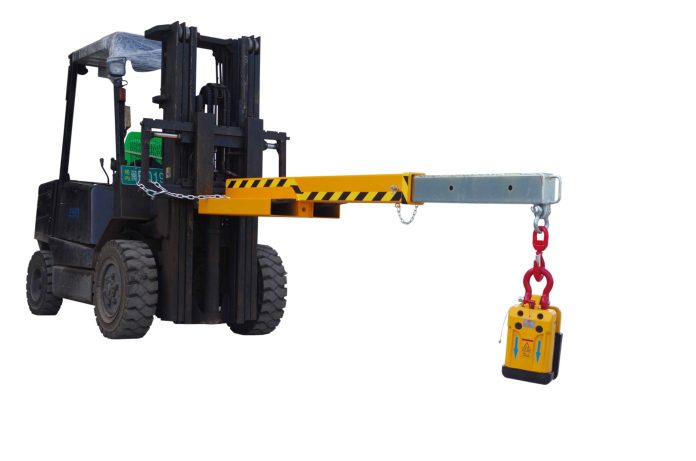

Transferring items is pretty simple, until the weights become too heavy, cumbersome, or difficult to position and manoeuvre. Having the right gear speeds up mortality and leaves less ground for weapon errors whereas an unsuitable selection would purpose impose hold up and entirely raise the price.
Depending on the industry, there will be a clear-cut winner. The needs of a warehouse are very different from those of a construction site or plant. To select equipment that is appropriate for your needs, it helps to understand those differences.
Warehousing: Speed and Organisation Matter
Warehouses move products constantly. So, pallets arrive, goods go into storage, orders get picked, and finished shipments get loaded.
This renders every material movement equipment like stackers, conveyors a valuable asset. Instead of flow lanes, equipment should functionalise tight aisles while enabling high-frequency traffic.
Warehouse operators should consider:
- Load weights and dimensions
- Aisle widths
- Lifting heights
- Travel distances
- Indoor or outdoor use
- Battery, electric, or fuel requirements
With the right equipment, you can greatly cut down on manual handling and keep stock moving through the facility.
Construction: Mobility and Tough Conditions
Construction sites are less predictable. Whether the ground surface is raw or formed with quantities of bricks, timber, steel components, and machinery it can alter over time.
This necessitates the use of material handling equipment chosen for actual site condition. Telehandlers, rough-terrain forklifts, cranes, and lifting attachments might all be appropriate for different jobs.
A construction site, as opposed to a warehouse, can require equipment to walk across different ground surfaces. Hence, ground clearance, selection of tyres, and even machine stability could be key considerations.
Manufacturing: Precision Meets Production
A manufacturing facility typically transfers raw materials, in-process components (from sub-assembly operations), and finished goods. The process must fit into an orderly flow of production.
This could be forklifts, hoists, cranes to conveyors, and specialised lifting devices. Which is the best choice depend on the materials and how often you need to move it.
If the facility deals with heavy metal components, it may be required to use specially designed equipment made for heavy loads, so that all the tasks can be completed within the given time. A plant making smaller items may stress speed and repetition more often.
How the Three Industries Differ?
Every industry prioritises differently.
- Warehousing is all about speed, storage density, and repetitive movement.
- Mobility, ground conditions, and flexibility: the key to adapted construction
- In manufacturing, the need for precision, repeatability, and integration with production systems rarely allows you much leeway.
This is why it is rarely a good idea to buy the biggest or fastest machine.
Think About the Entire Workflow
You should examine where the materials starting from, look to their target destination, and also see how many times they are moved from one place to another.
Consider the complete journey:
- Loading and unloading
- Transport across the site
- Storage or staging
- Positioning
- Last mile delivery to site
An effective piece of material movement equipment at one stage may cause a bottleneck at another.
Choosing for Long-Term Value
The least expensive machine is not always the most cost-effective. Operating costs can be vastly affected by downtime, maintenance, energy use, and operator efficiency.
Organisations must also determine whether their requirements could change. A flexible machine or perhaps an appropriate attachment could be useful at such time as workloads change.
Performance through the working environment, not just purchase price, should be the focus when comparing material handling equipment.
Choose Around the Job
Warehouses, construction sites, and manufacturing plants all present unique material-handling challenges. The correct answer depends on the loads, environment, flow, and frequency of use.
Start by understanding the job. You should compare equipment based on capacity, mobility, safety, and operating cost.
From warehouses who bustle about needing material handling equipment to construct or manual labor job sites that want certain machinery, selecting by genuine need increases output, and help in keeping workday operations safer.