

Dirt gets ignored until something dies in it. A yard that looks great on planting day can fall apart by midsummer if the ground underneath was never sorted out. Soil work happens out of sight, yet it decides how well every shrub, lawn, and flower bed performs.
What Actually Happens Beneath a Healthy Lawn?
A cup of good soil holds billions of microbes, plus fungi that link up with roots and pass along water and minerals. Earthworms tunnel through the top layers and leave channels that let air and moisture travel deep. Roots follow those channels. Pour a new lawn over lifeless fill dirt, and none of that activity exists, so grass grows shallow and burns out at the first heat wave. Soil texture matters too, since sand, silt, and clay each hold water differently. Loam, a balanced mix of all three, gives plants the easiest start. Most residential lots arrive with something far less friendly.
Why Do New Construction Yards Struggle So Much?
Builders scrape off the topsoil, sell it, and leave behind subsoil packed down by heavy equipment. What remains is often hard as a parking lot. Buried drywall scraps, concrete wash, and leftover lumber sometimes get covered with a thin skin of sod. Water pools on top, roots stall at the compacted layer, and homeowners blame the grass seed. Digging a test hole usually reveals the truth within minutes. Fixing it means breaking up that dense layer and bringing in real topsoil, not just a few inches of cheap fill.
Should the Lot Be Cleared and Graded First?
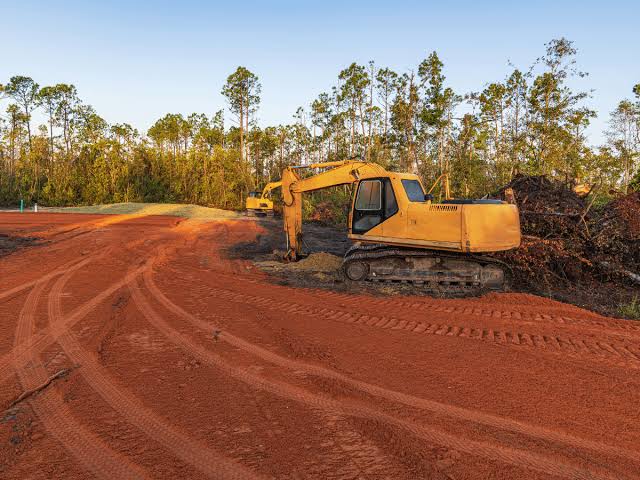
Yes, on most rough properties. Stumps, brush piles, and old roots decay underground and leave voids that sink over time, which ruins patios and fresh sod alike. Land clearing services strip a site down so the true grade becomes visible, and that makes proper slope planning possible. Grading comes next, shaping the surface so water moves away from the house instead of toward it. People searching land clearing services near me will see tree crews, excavation outfits, and general haulers all lumped together. Comparing land clearing companies near me gets easier by asking who owns grading equipment and who finishes the dirt work afterward.
How Can You Tell What Your Soil Needs?
Testing beats guessing every time. A basic lab report shows pH, nutrient levels, and organic matter, and it costs less than a single flat of perennials. Soil that tests too acidic locks up phosphorus, while alkaline ground can starve plants of iron. Lime raises pH, sulfur lowers it, and both take months to fully work. Pulling samples from several spots helps, since a single yard can hold three different soil types. Anyone hiring a landscaper near me should ask whether testing comes included, because bids that skip it are built on assumptions.
Does Adding Compost Fix Everything?
Compost helps, though it works best as one piece of a larger plan. Organic matter loosens clay, helps sand hold moisture, and feeds the microbes doing the underground work. Spreading it on top of hard ground without breaking up the compaction first wastes most of the benefit. Tilling it into the top six to eight inches gives roots room to spread. Over-tilling backfires, though, because it breaks down soil structure and kills off helpful fungi. A light pass with the right equipment beats an aggressive one.
What Does a Smart Soil Prep Schedule Look Like?
Fall gives soil the most time to settle, thanks to cooler temperatures and steady rain. Amendments mixed in during autumn have months to blend before spring planting. Spring prep works as well, though the window before summer heat is short. Digging when the ground is soaking wet ruins its structure, so a quick squeeze test helps. Soil that crumbles in the hand is ready, and soil that forms a sticky ball should wait. Finished beds then need mulch, which holds moisture and breaks down into fresh organic matter.
Who Can Handle the Heavy Lifting?
Soil preparation takes more than a shovel once a property gets larger or rougher. Proper landscaping starts with equipment that can clear, grade, and amend ground evenly, and few homeowners own that kind of gear. Searching landscaping near me turns up plenty of design-focused crews, but the better fit is a company that treats dirt work as seriously as plant selection. Woods Landscaping & Dirt Work LLC provides land clearing, excavation, grading, and landscaping services for property owners in Decatur, Alabama, and surrounding areas. The company helps prepare uneven, overgrown, or poorly drained land for new lawns, planting beds, and other outdoor improvements. From clearing unwanted vegetation to correcting ground elevations and preparing soil for planting, its services can help homeowners address existing yard problems and create better conditions for long-lasting landscaping.