

Key Takeaways
- Chess sets serve as cultural artifacts, showcasing diverse artistic traditions.
- Historical sets like the Lewis chessmen and Charlemagne chessmen offer insights into medieval craftsmanship.
- Modern designers continue to innovate, blending functionality with artistic expression.
Table of Contents
- Historical Significance of Chess Sets
- Notable Historical Chess Sets
- Cultural Variations in Chess Set Designs
- Modern Innovations in Chess Set Design
- Collecting and Preserving Chess Sets
- Conclusion
Chess is more than a game rooted in strategy and logic. Its very pieces often serve as works of art, each set a unique reflection of the culture, materials, and craft traditions from which it emerged. From stately ancient relics to beautifully innovative modern designs, the evolution of chess sets offers a fascinating lens into both art history and world heritage. For those interested in exploring the rich background and diversity of these artifacts, historical chess sets provide a remarkable starting point, revealing shifts in artistic styles and materials across ages and civilizations.
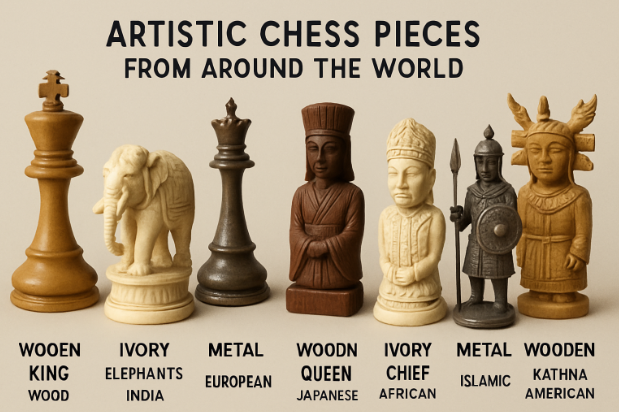
The cultural expressions captured in chess sets are as varied as the countries and eras that produced them. Whether carved from ivory, cast in metal, or assembled from local woods, these sets go beyond simple gameplay. They embody traditions, values, and stories, helping enthusiasts and historians alike to trace the journeys of peoples and ideas. With creativity manifest in every knight’s mane and bishop’s mitre, it is no wonder that collecting and preserving chess sets has become a passionate pursuit for many.
In examining the artistry of chess, it becomes clear how such pieces act as visual time capsules, preserving both major historical events and the nuances of everyday life. The link between these sets and social status, political power, and even religious influences has made them prized possessions in museums and private collections worldwide.
For anyone seeking further context on the significance of classic and contemporary craftsmanship in chess, major publications like The New York Times highlight how exhibitions and collections continue to breathe fresh narrative into these enduring cultural symbols.
Historical Significance of Chess Sets
Chess sets are not limited to functional pieces for gameplay. In many cases, they are valuable historical artifacts, encapsulating the aesthetics, societal values, and artistic sensibilities of the times and places where they were crafted. The significance of their materials and methods tells us much about trade routes, technological advances, and even geopolitical relationships. Pieces carved from rare ivory or adorned with precious metals might reflect the status and wealth of their owners, while folk designs carved from local woods hint at grassroots artistic movements.
Notable Historical Chess Sets
Among the world’s most admired chess sets are those whose artistry and origin story continue to captivate collectors and historians. The Lewis Chessmen, discovered in the 19th century in Scotland but crafted in medieval Scandinavia, are carved from walrus ivory and whale teeth. Their expressive facial features and unique postures reveal snapshots of societal hierarchy and artistic trends from an era centuries past. Not far behind in prominence is the Charlemagne chess set, thought to date back to the 11th century and crafted in Salerno, Italy. Created from elephant ivory, its blend of Islamic and European influences showcases cross-cultural exchange at the dawn of the Middle Ages. These iconic sets provide rare material evidence of craftsmanship ideals and the movement of artistic motifs across borders.
Cultural Variations in Chess Set Designs
The variety of chess sets across the globe highlights how the game adapts to local customs, motifs, and stories. Makonde chess sets, for example, come from the Makonde people of Tanzania and Mozambique. Their extraordinary skill in wood carving brings to life scenes from local mythology and daily existence, transforming each chess piece into a miniature sculpture. In 17th-century Germany, the Selenus chess set gained popularity for its intricately lathe-turned pieces and tiered designs, echoing the grandeur of the baroque era. These unique forms demonstrate how artistic techniques and cultural narratives from across the world become embedded in seemingly simple objects.
Modern Innovations in Chess Set Design
Contemporary artisans continue to stretch the boundaries with imaginative use of material and form. British designer Daniel Weil has created notable examples, including his Grand Master Table, a chess table set crafted from wenge wood and bronze that blends modern minimalism with traditional elegance. Each element is carefully balanced for both visual impact and tactile pleasure, turning the act of playing chess into a multisensory experience. Meanwhile, the Indian Chess Company, based in Mohali, Punjab, produces luxury chess sets that combine deep-rooted regional craftsmanship with high-grade materials such as rosewood, ebony, and brass. Such contemporary work exemplifies how designers borrow from history and culture while molding their creations to today’s aesthetic and functional preferences. For a deeper insight into contemporary chess set innovations, see Architectural Digest, which often features profiles on exceptional design work in the field.
Collecting and Preserving Chess Sets
Preserving the artistry and integrity of chess sets is crucial for enthusiasts, scholars, and collectors alike. Fine chess sets are best protected by storing them in spaces with controlled temperature and humidity, since wood and ivory are sensitive to environmental changes. Regular, gentle cleaning using non-corrosive materials helps maintain the luster and detailed carving of the pieces. Keeping records of provenance, previous ownership, and historical context further enhances the value of each set. For those building collections, awareness of rare materials and craftsmanship styles, as well as ongoing documentation, is essential not just for preservation but for passing these treasures to future generations.
Conclusion
Chess sets transcend their practical function, becoming artifacts that command respect as much for their beauty as their utility. Whether carved centuries ago or designed today, each set is a testament to creativity and tradition. By exploring and preserving these objects, collectors and enthusiasts help keep alive the intertwined narrative of chess, art, and cultural heritage.