
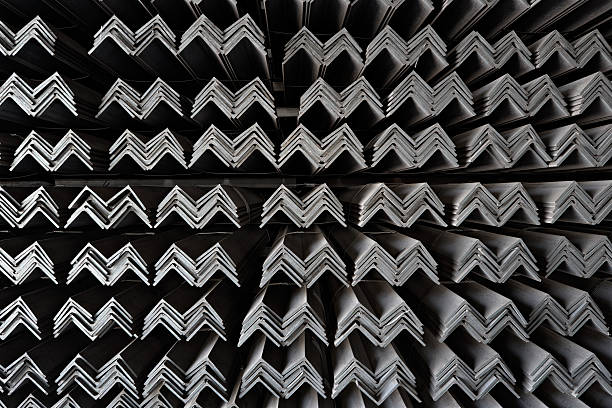

I didn’t think much about steel angles when I first started writing for construction-related websites. Beams, rods, pipes, fine. All sounded the same to me back then. Then one site assignment came along and suddenly Ms angle was everywhere. Warehouses, stair frames, machine supports, random sheds near highways. Once you notice it, you can’t unsee it. It’s kind of like realizing how many things run on hinges. Boring until something breaks.
Mild steel angles don’t get hype on social media like fancy architectural glass or stainless finishes, but if you scroll deep enough on construction reels or factory walkthroughs, you’ll see them holding stuff quietly in the background. That’s their whole personality. No drama, just strength.
Why Mild Steel Angles Are Still Everywhere
There’s a reason fabricators keep reaching for MS angles instead of experimenting too much. Mild steel has this forgiving nature. It bends before it snaps, welds without throwing tantrums, and doesn’t demand some luxury-level maintenance routine. If steel had moods, mild steel would be the chill one.
I once spoke to a small workshop owner while researching another piece. He said something like, “Angles are like the chappals of steel.” Kinda funny, but true. Not flashy, but you’ll use them daily. Frames, racks, supports, platforms. You name it. Especially in India, where cost matters and durability is non-negotiable, MS angles are almost default.
Also a lesser-known thing most people outside the industry don’t talk about. Mild steel angles are easier to customize on-site. Cutting, drilling, adjusting sizes doesn’t require some high-end CNC setup. That flexibility saves time, which in real projects means saving money and avoiding angry phone calls.
The Price Factor No One Tweets About
Online chatter around steel usually focuses on TMT bars or sheet prices going up every other month. Angles don’t trend, but contractors watch their prices closely. Even a small rate fluctuation affects big structures because angles are used in bulk.
What surprised me is how often people overlook long-term cost. MS angles might rust if left untreated, sure. But with basic primer or paint, they last years. Compared to some “premium” materials that need specialized handling, angles feel low-effort. Almost old-school.
I saw a thread on a construction forum where someone complained about corrosion issues. Half the replies weren’t blaming the steel but the storage conditions. Left in open rain, anything will complain. Mild steel just complains honestly.
Strength Without Showing Off
Angles don’t scream strength. They whisper it. The L-shape is simple, but structurally smart. It distributes load in a way flat bars can’t. That’s why they’re everywhere from industrial sheds to small residential staircases.
There’s also this misconception that angles are only for heavy-duty stuff. Not really. I’ve seen them used in modular furniture frames and even temporary event structures. They’re versatile, which doesn’t sound sexy, but engineers love that word.
Another niche fact, MS angles are often preferred in seismic zones for certain non-primary structures because of their ductility. Not saying they’re earthquake-proof miracles, but they behave predictably under stress. Predictability is underrated until things start shaking.
Fabricators’ Quiet Favorite
If you hang around fabrication shops long enough, you’ll notice a pattern. Angles stacked in corners, some rusty, some freshly cut, all waiting for their turn. Fabricators like materials that don’t argue back. Mild steel angles are cooperative.
One fabricator joked that angles forgive bad measuring. That’s not entirely true, but they are easier to correct compared to pipes or complex sections. A little grind here, a weld there, done.
This is probably why so many small-scale industries stick with MS angles. They don’t need advanced training or imported tools. Just experience, intuition, and a steady hand.
Quality Still Matters More Than People Admit
Not all MS angles are created equal. That’s something buyers learn the hard way. Chemical composition, rolling process, dimensional accuracy, all matter. A cheap angle might look fine until it starts twisting under load.
This is where sourcing becomes important. People often chase the lowest price, then complain later. Seen that story too many times in comment sections and WhatsApp groups. A reliable supplier makes a difference, even if no one brags about it online.
Good angles feel solid. Corners are clean, thickness is consistent, and they don’t feel flimsy when handled. Sounds basic, but basics are what hold buildings up.
Wrapping It Up Without Wrapping It Up
I don’t think MS angles will ever go out of style. They’re not trendy enough to fall out of fashion. As long as industries build, expand, and improvise, angles will stay relevant.
From factory floors to support frames you never notice, Ms angle keeps doing its job without asking for credit. Maybe that’s why people like me end up writing about them after ignoring them for years. They’re not loud, but they’re essential. And honestly, in construction, that matters more than looking impressive.