
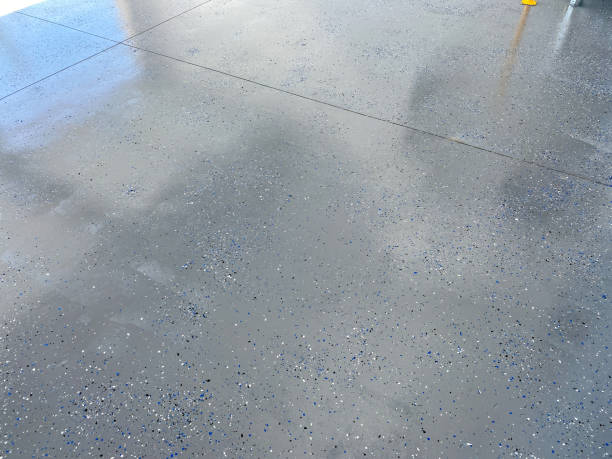

Tiny pinholes in a fresh coating often come from air moving out of the concrete below. Outgassing happens when trapped air inside the slab expands and pushes through wet resin before it has time to cure. Professional epoxy floor companies manage that movement through timing, temperature checks, primers, and careful surface preparation.
Why Does Concrete Push Air Into Fresh Epoxy?
Concrete contains thousands of small pores that hold air and sometimes moisture. Rising slab temperatures make that air expand, sending it toward the surface just as epoxy flooring is being applied. Fresh resin can trap the bubbles or let them burst, leaving pinholes and small craters. Sunlight, warm indoor air, and HVAC cycles can change slab temperature quickly, so crews monitor the concrete itself instead of judging conditions by how the room feels. Porous slabs can react faster because they hold more air close to the surface after grinding.
A Cooling Slab Gives the Coating More Time to Settle
Applying resin while the slab is cooling can reduce outward air movement. Cooler concrete tends to pull air inward rather than force it through a wet coating. That shift gives the material a better chance to level before bubbles form. Scheduling around the slab’s temperature curve can be more effective than simply choosing the coolest hour of the day.
Experienced installers may schedule certain coats later in the day, after direct sunlight and indoor heat have eased. Buildings with large doors or west-facing openings need extra attention because one part of the slab may stay much warmer than another. Anyone searching for epoxy flooring near me can ask how the contractor tracks slab temperature during application.
Primer Seals Many of the Pores That Release Air
A penetrating primer reaches into open concrete and helps seal pathways that can feed bubbles into thicker coats. Once that first layer wets the slab, later material sits over a more stable surface with fewer places for air to escape. Coverage has to stay consistent, though. Too little primer can leave dry, porous areas, while excessive material may cure unevenly. Contractors adjust application rates according to concrete porosity, grinding profile, and how quickly the surface absorbs resin. Uniform primer coverage also helps prevent one section from outgassing more aggressively than the area beside it.
Grinding Can Reveal Areas More Likely to Outgas
Mechanical grinding opens concrete pores so the coating can form a strong bond. At the same time, it may expose porous sections that were hidden beneath a dense surface. Old slabs, patched areas, and softer concrete can behave differently from the rest of the floor.
Technicians often notice those differences as soon as primer touches the slab. Areas that darken or absorb resin quickly may need another pass, a different application rate, or closer monitoring during the next coat. Homeowners comparing an epoxy garage floor near me should expect the condition of the concrete to affect both primer use and installation timing. Repairs deserve attention too, since patching compounds may release air at a different rate from the original slab.
Pinholes Usually Show Themselves Early in the System
The first wet layer sits directly over the concrete, making it the most likely place for outgassing defects to appear. Small bubbles may rise, break, and leave holes as the resin starts to set. Fast-curing products give crews less time to correct those spots, while slower materials may allow more bubbles to release before hardening. Commercial epoxy flooring projects often use coordinated crews so one installer can watch the fresh surface while others continue mixing and spreading material. Light backrolling can help release isolated bubbles, but excessive rolling after the resin starts setting may leave texture or roller marks.
Air Movement and Moisture Vapor Are Different Problems
Air expansion is driven mainly by temperature changes. Moisture vapor comes from water moving through the slab, and it can create bubbles or adhesion trouble for completely different reasons. Treating one problem as the other can lead to the wrong coating choice.
Testing helps separate the two. Relative humidity readings, slab temperature, dew point, and visual inspection give installers a clearer picture of what is happening below the surface. Property managers comparing epoxy floors near me should look for contractors who identify the cause before recommending a repair or moisture-control product. Accurate diagnosis prevents crews from treating simple air movement with an unnecessary moisture system.
Later Coats Depend on Fixing the First Signs of Outgassing
Subsequent layers cannot hide every pinhole left underneath them. Open defects may need sanding, filling, or another seal coat before the body coat or topcoat goes down. Leaving them untreated can create tiny surface openings, uneven gloss, or weak points where dirt and liquids collect. Elite Coastal Epoxy works with residential and commercial concrete where porosity, moisture, and temperature can affect coating quality. Their team can evaluate those conditions and build an epoxy flooring system with the preparation, primer, timing, and layer control needed to reduce outgassing and produce a smoother finish. Careful monitoring between coats also helps catch defects before they become visible in the finish.