
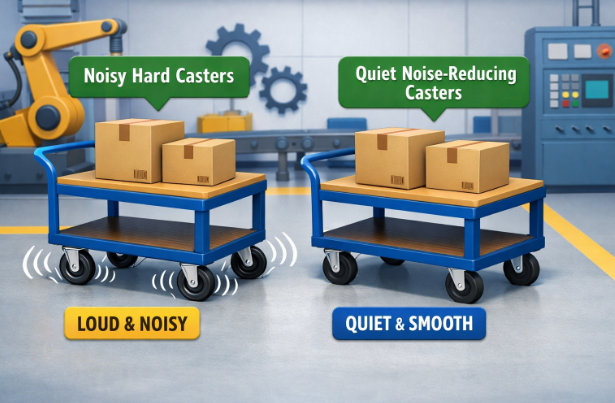

Key Takeaways
- Industrial noise poses health risks and reduces productivity.
- Casters are a significant source of noise in industrial settings.
- Implementing noise-reducing casters can mitigate these issues effectively.
- Noise management improves operational efficiency and employee well-being, creating a safer, more attractive workplace.
Table of Contents
- Understanding Industrial Noise
- Role of Casters in Noise Generation
- Features of Noise-Reducing Casters
- Benefits of Implementing Noise-Reducing Casters
- Industries Benefiting from Noise-Reducing Casters
- Choosing the Right Noise-Reducing Casters
- Frequently Asked Questions
Industrial environments often experience excessive noise levels, leading to worker fatigue, reduced productivity, and potential hearing loss. Implementing noise-reducing casters is an effective strategy to mitigate these issues, enhancing both workplace safety and efficiency. R.T. Laird, Inc., a leading designer and manufacturer of suspension casters, offers a wide array of shock- and noise reducing casters suitable for a range of applications, from light-duty office equipment to heavy-duty industrial material handling.
Understanding Industrial Noise
Industrial noise arises from various sources, including machinery, equipment, and material handling systems. Prolonged exposure to high noise levels can result in hearing impairment and increased stress among workers. According to the Occupational Safety and Health Administration (OSHA), noise-induced hearing loss is one of the most prevalent occupational health concerns.
Exposure to hazardous noise doesn’t just affect hearing; it can also elevate stress levels, disrupt communication, and contribute to accidents due to misheard warnings. Addressing workplace noise sources, including those generated by moving equipment, is crucial to a comprehensive safety strategy. Reducing noise at the source is considered the most effective way to minimize occupational noise exposure, rather than relying solely on personal protective equipment. In addition to immediate safety and health concerns, excessive industrial noise can affect employees’ morale and overall well-being. High noise levels often lead to absenteeism, lower job satisfaction, and higher turnover, underscoring the long-term importance of noise management in industrial settings.
Role of Casters in Noise Generation
Casters, the wheels attached to carts and equipment, significantly contribute to industrial noise. Factors influencing this include:
- Wheel Material: Hard materials like steel or hard plastics generate more noise compared to softer materials.
- Bearings: Worn or low-quality bearings can produce squeaking and grinding sounds.
- Design and Construction: Poorly designed casters may lead to vibrations and rattling noises during movement.
The impact of caster-generated noise is often underestimated because it can become a constant background disturbance. Whenever heavy carts or racks are moved across hard surfaces, the vibration and impact noise produced by standard casters can be amplified by both the floor material and the contents being transported. This cumulative noise can easily exceed 85 decibels in busy industrial settings, exceeding permissible exposure limits and posing unnecessary risk to anyone working nearby.
Features of Noise-Reducing Casters
Noise-reducing casters are engineered to minimize sound emissions through:
- Soft Tread Materials: Utilizing materials like thermoplastic rubber (TPR) or polyurethane to absorb vibrations.
- Precision Bearings: High-quality, sealed bearings reduce friction and prevent noise from debris.
- Advanced Swivel Design: Optimized swivel mechanisms decrease chatter and ensure smooth movement.
In addition to these primary features, some noise-reducing casters may also incorporate dual-wheel designs to distribute weight more evenly, further dampening sound and enhancing mobility. The choice of mounting hardware and frame construction can also play a pivotal role in noise reduction, as poorly aligned or loosely mounted components are prone to rattling.
Durability is another important factor in maintaining quiet operation over the long term. High-quality noise-reducing casters are designed to withstand the demands of continuous use, resisting wear and tear that might otherwise increase noise as components degrade.
Benefits of Implementing Noise-Reducing Casters
Adopting noise-reducing casters offers several advantages:
- Enhanced Worker Safety: Lower noise levels reduce the risk of hearing damage.
- Increased Productivity: A quieter environment improves concentration and efficiency.
- Regulatory Compliance: Helps meet occupational noise standards set by authorities like OSHA.
Other notable benefits include improved communication on the plant floor, workers are better able to hear important announcements, alarms, or the approach of moving vehicles, reducing the likelihood of accidents. Furthermore, facilities that proactively address noise are often perceived as more desirable places to work, giving them an advantage when recruiting or retaining skilled laborers.
The financial savings from implementing noise-reducing casters extend beyond regulatory compliance and reduced healthcare costs; quieter operations can prevent costly downtime due to noise-related maintenance issues and minimize potential legal liabilities related to occupational hearing loss claims.
Industries Benefiting from Noise-Reducing Casters
Several sectors have seen improvements by integrating noise-reducing casters:
- Healthcare: Hospitals and clinics require quiet environments for patient recovery.
- Manufacturing: Reducing noise in factories enhances worker comfort and communication.
- Warehousing: Quieter operations lead to better working conditions and efficiency.
Additional industries that enjoy clear benefits include education, where schools, universities, and libraries need to maintain low noise for optimal learning environments, and hospitality settings such as hotels and convention centers, where reducing background noise is important for guest comfort. Even in retail and food service applications, casters that keep noise to a minimum create more pleasant experiences for employees and clientele alike.
Choosing the Right Noise-Reducing Casters
When selecting noise-reducing casters, consider:
- Load Capacity: Ensure the caster supports the weight requirements.
- Floor Compatibility: Match wheel material to floor type to prevent damage and reduce noise.
- Environmental Conditions: Choose materials resistant to chemicals or extreme temperatures if necessary.
The anticipated frequency of use and speed of movement should also guide your selection, as some casters are optimized specifically for high-cycle environments or rapid travel. Consulting with a specialist or the manufacturer can help ensure you select the ideal caster for your specific needs, factoring in unique considerations such as hygiene, ease of cleaning, or non-marking properties for sensitive flooring surfaces. Maintenance requirements should not be overlooked. Choosing casters with sealed bearings and durable treads can reduce the need for frequent replacements, lowering the total cost of ownership over time. Ensuring compatibility with the mounting fixtures of existing equipment is critical for a smooth installation, especially when retrofitting older carts or racks.
Frequently Asked Questions
Q: How much can noise-reducing casters decrease noise levels?
A: Depending on the design and materials, noise-reducing casters can lower noise levels by up to 64% in perceived volume.
Q: Are noise-reducing casters more expensive than standard casters?
A: They may have a higher initial cost but offer long-term benefits like improved worker health and compliance with noise regulations.
Q: Can noise-reducing casters be retrofitted to existing equipment?
A: Yes, they can often replace standard casters on existing equipment, provided compatibility is ensured.
Q: How often should noise-reducing casters be inspected or maintained?
A: The frequency of inspection depends on usage and environment, but casters should generally be checked quarterly for wear on the tread, debris in the bearing, and secure mounting. Regular maintenance prolongs the sound-dampening efficiency of your equipment and extends its lifespan.
Q: What is the best material for noise reduction in casters?
A: Thermoplastic rubber and polyurethane are popular choices due to their excellent sound absorption, wear resistance, and gentle impact on most flooring types. Choosing the right material depends on the specific operational demands and flooring in your facility.
Q: What is the impact of noise reduction on overall facility performance?
A: Reducing noise can lead to tangible improvements in worker comfort, morale, and safety, while indirectly reducing operational interruption and machine wear. Facilities that prioritize noise management are less likely to experience productivity losses and costly staff turnover related to unpleasant work environments.