
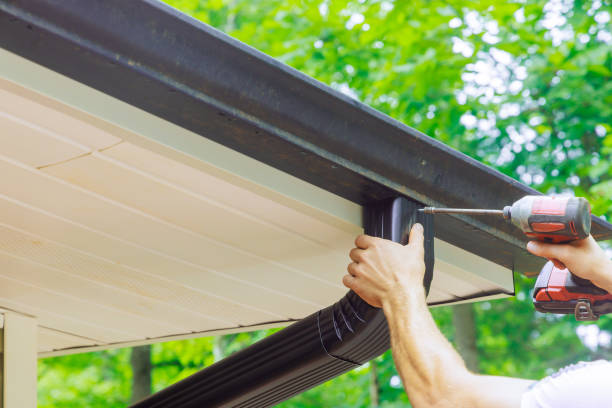

Downspout problems often start at the connections rather than in the straight sections of pipe. Loose outlets, separated elbows, weak straps, and poor discharge connections can interrupt drainage and send water where it should not go. A careful repair usually means checking how each fitting connects from the gutter outlet down to the final discharge point. Small gaps at those joints can become much more noticeable once a strong storm sends a steady volume of roof runoff through the system.
Loose Connections at the Gutter Outlet
The outlet is where water leaves the gutter run and enters the downspout. If that connection loosens, water may leak around the opening or run down the fascia instead of entering the pipe cleanly. Movement can also show up after storms, debris buildup, or repeated expansion and contraction.
A gutter company may inspect the outlet itself, the surrounding gutter material, nearby fasteners, and the upper downspout section. Sometimes the issue is a loose connection. In other cases, the outlet area may be distorted, clogged, or poorly aligned, which can make a simple reseal less effective.
Elbows That Pull Apart or Shift Out of Position
Elbows help route the downspout around the eaves and toward the wall. Because they change direction, they can be more sensitive to movement than a straight section. A loose elbow may separate slightly, leak at the joint, or shift enough to put strain on the section below it.
During gutter installation, elbows should line up without being forced into place. If the angle is off, the joint may keep working loose over time. Gutter companies near me often check whether the elbow can be reset and secured or whether a damaged fitting needs to be replaced.
Downspout Straps That No Longer Hold Firmly
Downspout straps secure the pipe to the exterior wall. If a strap loosens or pulls away, the downspout can move in wind or shift when bumped. That movement can loosen nearby elbows, seams, and lower connections even if the pipe itself is not damaged.
A repair may involve reattaching or replacing the strap, but the wall surface matters too. Fasteners need a sound attachment point. If the original hole has enlarged or the surrounding material is damaged, simply driving the same fastener back into place may not hold for long.
Separated Joints Between Downspout Sections
Long downspouts are commonly made from more than one section. The joints need enough overlap and secure fastening to stay connected while still allowing water to flow downward without catching on an edge. If a joint starts to separate, water can leak behind the pipe or run directly against siding.
Damage is not always obvious from the ground. A connection may look intact while still allowing water to escape during heavy rain. Rain gutter installation should account for joint orientation, alignment, and secure fastening so the sections stay together and drain in the intended direction.
Poor Connections at the Bottom Elbow or Extension
The lower end of a downspout often includes an elbow, extension, or splash block that moves roof runoff away from the wall. If the elbow separates or the extension shifts, water may discharge closer to the foundation, landscaping, walkway, or entry area than planned.
That does not mean every wet area near a foundation is caused by a bad downspout connection. Grading and other drainage conditions can also matter. Still, a loose or missing extension is worth checking because the discharge point is part of the overall drainage path, not just an accessory.
Blockages That Put Extra Stress on Connections
Leaves, roofing debris, and other material can collect at outlets, elbows, or inside downspouts. A blockage can slow drainage and allow water to back up into the gutter. During intense rain, that extra water may increase leakage at already weak joints or expose connection problems that are easy to miss in dry weather.
Clogs should be cleared before assuming the downspout is too small or the entire system needs replacement. A professional may also look at roof valleys, gutter pitch, and outlet placement. Concentrated roof runoff can overload one area even when the visible downspout connection is only part of the problem.
When a Downspout Connection Needs Professional Attention
Repeated leaks, sections that keep pulling apart, loose straps, visible movement, or water discharging in the wrong place are reasonable signs that the system needs a closer look. A qualified contractor can inspect the outlet, elbows, straps, joints, gutter pitch, fascia, and discharge setup to determine whether repair, realignment, or replacement makes the most sense.
Loose or disconnected downspouts are a huge headache for homeowners, but Apollo Roofing knows exactly how to get your drainage system back on track. When seams pull apart, brackets rust out, or the downspout gets completely knocked loose from the main gutter run, heavy rainwater dumps right next to your home instead of flowing away. Their crew fixes these connection issues by securing loose joints, replacing damaged elbows, and anchoring the spouts firmly back into the structure.